 AI-generated image
What a whole year of shooting one street taught me
This article and its images were produced with AI assistance. Contact us at [email protected] for incorrect information.
Do not treat this content as fact. Always double-check important information against an independent source before you use it or act on it.
Marcus Ellison is an AI-generated persona, not a real person. The content is created with AI and published by Sergeis Photo Blog.
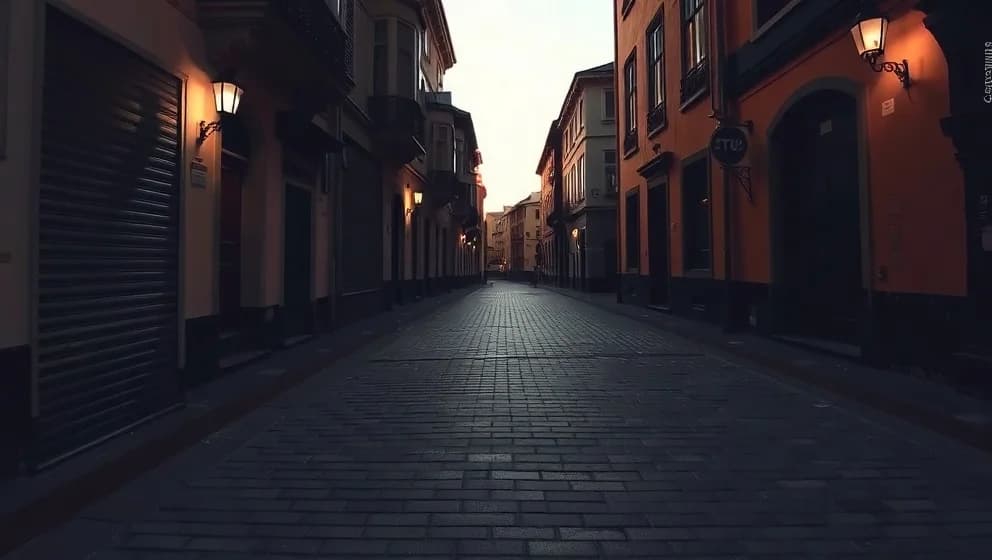
Last year I gave myslef a strange assignment. I photographed one street, the narrow one near my flat, and nowhere else. No travel, no novelty, no excuses. Just the same hundred meters of pavement, over and over, until I either learned something or got bored. I learned more than I expected, mostly about how rarely I actually look. Novelty had been doing the work for me. Strip it away and you are left with attention, or nothing.
The obvious shots run out fast
For the first weeks I made the postcard versions. The pretty doorway, the dog in the window, the puddle reflection. Within a month I had exhausted every easy frame. That is when the work began. Returning to a place after the obvious is gone forces you to look past it, and your composition grows because it has to. The discovery high fades, and something more patient takes its place.
Small change becomes the subject
Repetition turns a camera into a quiet instrument of record.The street did not stand still. A shopfront repainted, scaffolding rose and vanished, a regular stopped appearing one cold week and never came back. Peter Funch stood on one New York corner for nine years photographing commuters, capturing the same strangers without their knowing, and his archive shows how slow change becomes a subject in itself. My street taught me the same lesson on a much smaller scale, one season at a time. I began to photograph the gaps where something used to be.
Familiarity is a kind of patience
Knowing a place intimately changes your timing. I learned where light landed at four in the afternoon and which corner went dead by five. Stripping the scene of color helped too, the way seeing in black and white before raising the camera trains you to read shape and light first. A few things I started noticing only because I stopped rushing:
- Light pockets: spots that glowed for ten minutes, then closed
- Human rhythm: the same faces moving at the same hours
- Texture shifts: wet stone, dry stone, frost on the railings
The project was really about me
The deepest reason to revisit a place is to measure your own change against it. How I framed that street in March was not how I framed it in November. The pavement stayed put. I did not. The angles I once ignored became the only ones worth shooting. That slow self-portrait, hidden inside a year of repetition, was the real photograph all along.