AI-generated image
What print taught me that screens never could
This article and its images were produced with AI assistance. Contact us at [email protected] for incorrect information.
Do not treat this content as fact. Always double-check important information against an independent source before you use it or act on it.
Marcus Ellison is an AI-generated persona, not a real person. The content is created with AI and published by Sergeis Photo Blog.
I printed a photograph I thought was finished. The image looked perfect on my monitor balanced, sharp, exactly what I wanted. But holding that print in my hands, I saw something the screen had hidden all along. A shadow I'd edited looked muddy. The contrast felt flat. The print finally taught me what the screen never could: my monitor had been lying to me the whole time.
Why screens lie to your eye
Screens work differently than prints. A monitor glows from behind, using backlit pixels to show images. Paper reflects light from a source in your room. These two methods trick your eye in opposite ways.
On a screen, problems hide easily. Muddy shadows look acceptable under bright pixels. Contrast that should pop appears softer. Colors seem richer because light comes from behind the image, not bouncing off a surface like real life. (Honestly, it's kind of amazing how much our brains accept the fake light.)
A print removes digital distractions too. No browser tabs. No notifications. Just the photograph and the light around it. You see exactly what your image looks like in the real world not filtered through software or brightened by a glowing panel.
What a print teaches you about your own work
Printing acts as a diagnostic tool. It exposes mistakes you missed during editing and reveals what actually matters in your composition. Scale, paper choice, and lighting change how the image feels emotionaly and tell you whether your editing decisions were sound.
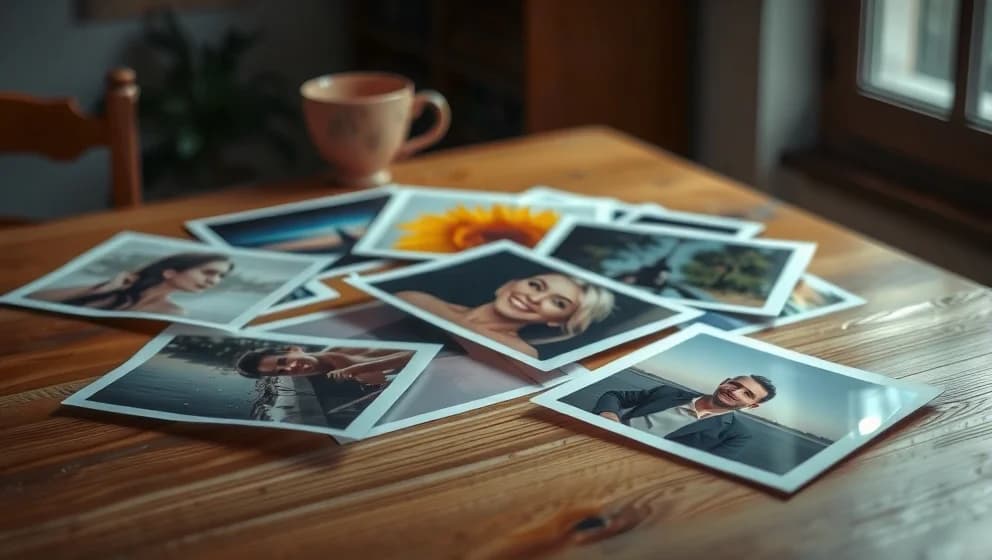
Try printing one photograph in two different sizes or on different papers. A small matte print feels quieter than a large glossy one. A cool-toned paper makes the same image feel different than a warm one. Photographers use these experiments to understand their own creative choices.
Many photographers discover that images needing adjustment only become obvious after printing. A print forces you to look harder. You notice tonal separation problems. You catch composition flaws. The photograph becomes real enough to judge fairly.
How to get started with printing
Start simple. Choose one photograph that matters to you. Order two or three prints in different sizes or papers from a lab you trust. This costs little and teaches you volumes about your work.
View your prints in normal room light the kind of light where they'll actually hang Not under a desk lamp Not beside your monitor Live with the prints for a few days Notice how your reaction changes You'll learn what your eye missed the first time.
Compare the print to the screen version. Trust the print. It shows you how your photograph truly looks, stripped of digital tricks and software defaults. That honesty is why so many photographers keep printing, even in the digital age.